
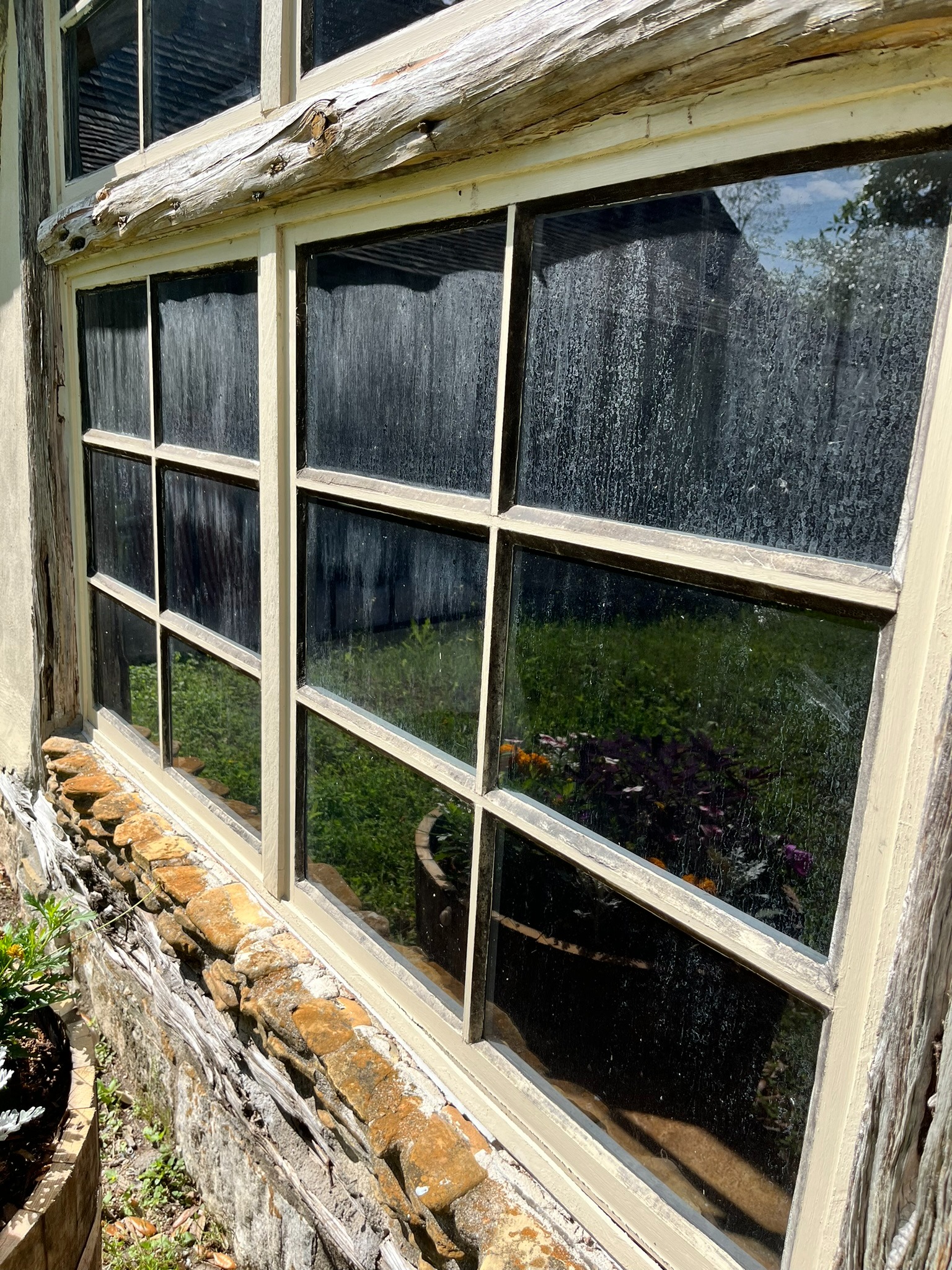
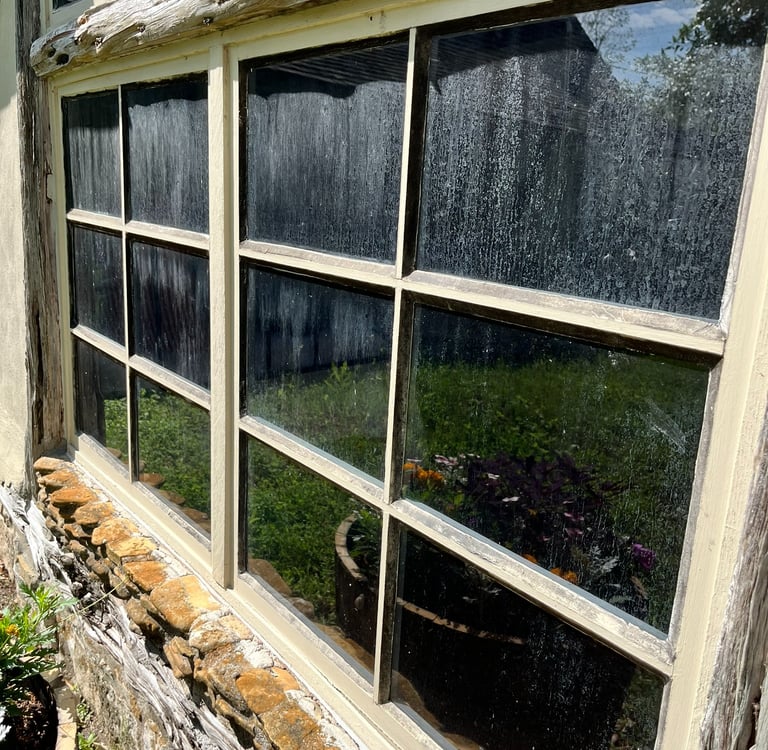
If you live anywhere in the San Antonio area, you already know our water is rough on glass.
That chalky white film on your windows? Those cloudy streaks that won't wipe off no matter how hard you scrub? That's hard water damage, and if you let it go too long it turns into something worse: permanent oxidation that etches straight into the glass.
This is one of the most common problems I deal with as a window cleaner in San Antonio. I've seen it on brand new builds in Stone Oak, older ranch homes in Boerne, Hill Country estates in Fair Oaks Ranch, and lakefront properties in Canyon Lake. If your windows face a sprinkler, a pool, or just get rained on regularly, you've probably got it too.
Here's what's actually going on, and what it takes to fix it.
What Causes Hard Water Stains on Windows
San Antonio sits on limestone aquifers. Our tap water, well water, and rainwater that runs off rooftops all carry a heavy mineral load, mostly calcium and magnesium. When that water hits your glass and evaporates, the minerals stay behind.
Every time it happens, another thin layer builds up. A few weeks of sprinkler overspray or a rainy season can leave your windows looking hazy and cloudy even right after you wipe them down.
The most common culprits I see on jobs:
Sprinkler heads aimed too high, hitting windows directly
Rain runoff from dirty gutters dragging mineral deposits down the glass
Pool splash on nearby windows
Hose water used to "clean" the windows (makes it worse, not better)
When Hard Water Becomes Oxidation
Here's the part most homeowners don't know. Hard water stains aren't just sitting on top of the glass. Given enough time and Texas heat, those minerals bond chemically with the glass surface. That's oxidation.
Once oxidation sets in, regular cleaning won't touch it. You can scrub for hours with vinegar, Windex, or any grocery store cleaner, and the windows will still look foggy. At that point you're not cleaning the glass, you're fighting an actual chemical reaction that happened on the surface.
Left long enough, oxidation causes permanent pitting. That's when we can't fix it anymore and the glass has to be replaced.
Why DIY Usually Makes It Worse
I understand the instinct. Watch a YouTube video, grab some white vinegar and a Magic Eraser, go to town. I've been called out to plenty of homes where the homeowner tried that first.
The problem:
Vinegar is too weak for real oxidation and leaves streaks behind
Magic Erasers and scrubbing pads scratch tempered glass
Harsh chemicals like CLR or Lime-Away can damage window frames, screens, and surrounding paint
Wiping in the wrong direction embeds the minerals deeper into the surface
I've also seen people accidentally kill their landscaping by letting harsh chemical runoff hit the plants below the window.
If you've got light buildup that's only a few weeks old, a soft microfiber cloth and distilled water can get you by. But anything older than a season usually needs professional treatment.
How I Actually Remove It
For hard water and oxidation jobs, I use a multi-step process that's built for San Antonio conditions. Here's the short version:
Full exterior and interior wash first using a pH-neutral cleaner to remove surface dirt, dust, and pollen. You can't treat oxidation if it's buried under three months of grime.
Oxidation assessment on each affected pane. Not every window needs the same level of treatment, and overtreating can dull the glass.
Professional oxidation remover applied by hand with a soft cerium oxide pad. This is the step that actually breaks the mineral bond without scratching the glass.
Final rinse and squeegee with filtered water so no new mineral deposits form while drying.
Frames, tracks, and screens cleaned separately so buildup doesn't wash back onto the glass the next time it rains.
This is the core of my Gold package, and it's the only service tier that includes oxidation removal. Most homes in the Hill Country need it at least once a year if the windows face direct sun and sprinkler spray.
How to Prevent It Coming Back
Once your glass is restored, keeping it that way is mostly about water management:
Adjust sprinkler heads so they don't hit the windows. This alone fixes 80% of the problem.
Clean your gutters at least twice a year. Clogged gutters are the number one cause of dirty rainwater runoff on windows.
Wipe down any glass that gets pool splash within a day or two
Book a professional clean every 6 to 12 months to catch new buildup before it oxidizes
If you already have an annual routine for your AC, your lawn, and your HVAC, add your windows to the list. It's cheaper to maintain them than to fix them after oxidation sets in.
Frequently Asked Questions
How do I know if my windows have oxidation or just regular dirt?
If you can wipe the stains off with soap and water, it's dirt. If the window still looks cloudy or streaky after washing, that's either hard water buildup or oxidation. A quick test: spray a small section with white vinegar and let it sit for five minutes. If the cloudiness fades slightly, it's hard water. If nothing changes, it's oxidation and needs professional treatment.
Can hard water stains damage my windows permanently?
Yes, if you leave them long enough. Early-stage hard water is removable with the right tools. Once it bonds with the glass and becomes oxidation, removal gets harder. Once it starts pitting the surface, the damage is permanent and the glass has to be replaced.
Is it safe to use vinegar on my windows?
For light, recent hard water spotting, yes. For real oxidation, no. Vinegar isn't strong enough to break the mineral bond, and overusing it can damage certain window tints and seals. I'd rather you call me before you experiment with it.
How long does oxidation removal take?
On an average home with 20 to 30 affected panes, it takes me most of a Saturday. I work solo and I don't rush jobs. Every pane gets checked and treated individually.
Do you serve my area?
I cover NW San Antonio, Helotes, Shavano Park, The Dominion, Stone Oak, Leon Valley, Fair Oaks Ranch, Boerne, Canyon Lake, and New Braunfels. If you're nearby and not on that list, text me anyway. I'll let you know.
Related reading: How to Clean Oxidized Windows and Residential Window Cleaning in San Antonio